Botox for Migraines in Roswell
Botox is FDA-approved as a preventive treatment for chronic migraine: fewer headache days, delivered through a standardized set of injections repeated every 12 weeks. Who qualifies is a medical question, and your consult answers it.
Complimentary first consultation
- Treatment~20 min
- CycleEvery 12 weeks
- Relief buildsOver 2–3 cycles
- CandidacyChronic migraine (medical)
Who it's for
Is Botox for migraines right for you?
The FDA approval is specifically for chronic migraine (15 or more headache days a month, at least 8 of them migraine), and that line matters, because the evidence supports it there and not for occasional migraines. Candidacy is a medical determination made at your consult: your headache history, patterns, and what you've already tried. If you don't meet the criteria, we'll say so and talk through what's actually indicated.
- 15+ headache days a month, 8+ of them migraine
- Preventive medications that haven’t worked or weren’t tolerated
- Migraine days that are stealing work, family or sleep
- A preventive approach, not another rescue medication
How migraine Botox treatment works
Consult. A medical headache history: frequency, patterns, triggers and prior treatments. This visit determines whether you qualify.
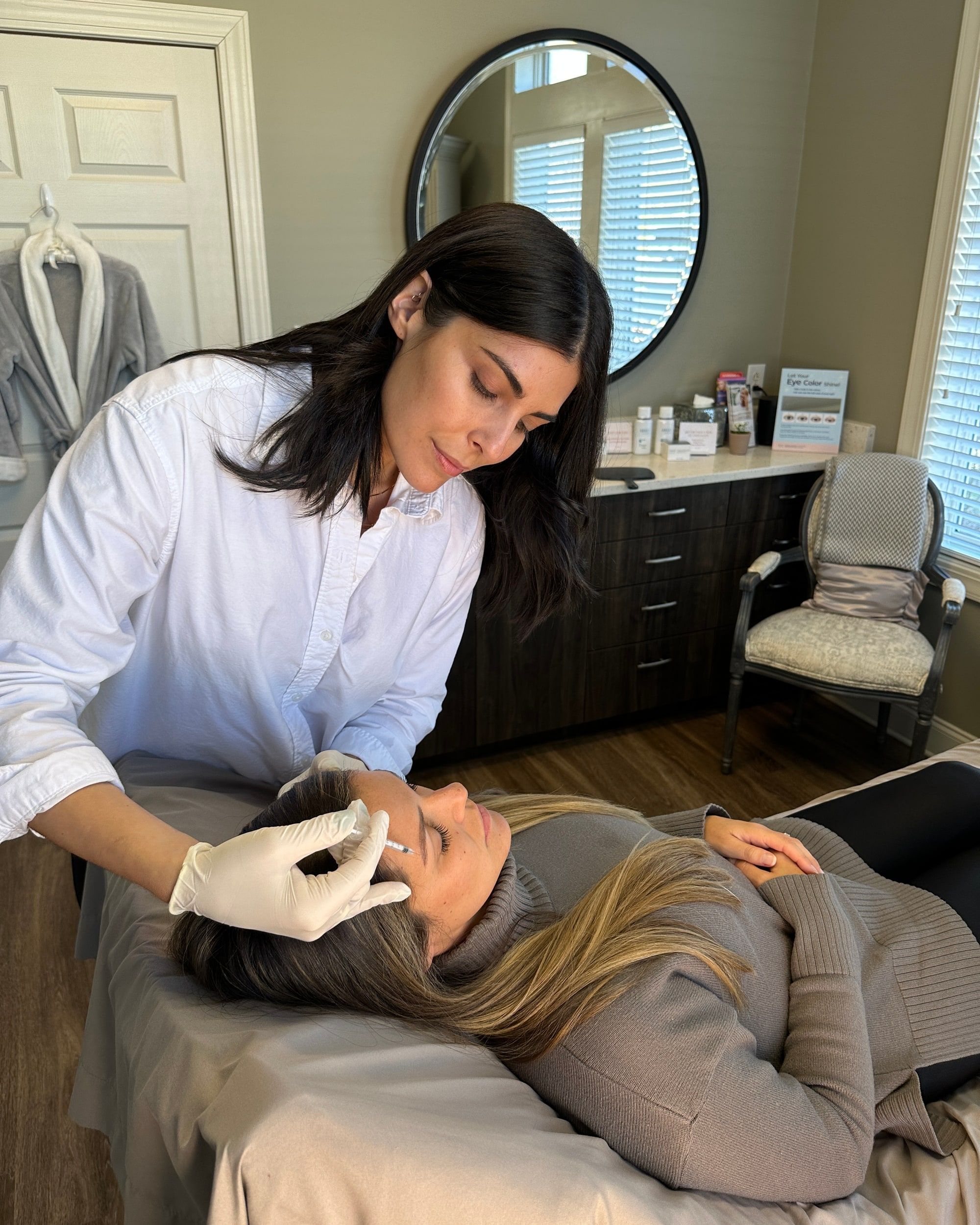
Treat. The standardized protocol: a series of small injections across the forehead, temples, back of the head, neck and shoulders. About 20 minutes.
Repeat. Cycles run every 12 weeks. Relief typically builds across the first two to three cycles, and we track your headache days between them.
What to know
Botox for migraines: risks, side effects & aftercare
The most common side effects are neck soreness and temporary injection-site tenderness; a small share of patients notice brow heaviness that resolves as the treatment wears off. Botox for chronic migraine has two decades of safety data behind the protocol. It is preventive, not a rescue treatment (it will not stop a migraine already underway), and existing rescue medications typically continue alongside it. Your history is reviewed before any treatment.
How Botox prevents migraines
Botox blocks the release of the chemical messengers that carry pain signals from the nerves of the head and neck, interrupting migraine's feedback loop before it amplifies, rather than dulling pain after it starts. That's why it's dosed as a fixed, evidence-based pattern across the head and neck rather than mapped cosmetically, and why the benefit is measured in fewer headache days per month, building over successive cycles.
Is Botox for migraines covered by insurance?
Many insurance plans do cover Botox for chronic migraine, typically after a documented diagnosis and prior preventive medications tried, a prior-authorization pathway usually run through a neurologist. We don't take insurance, so it's worth checking what your plan covers before you decide. If your plan won't cover it, or you'd rather skip that process, we can provide the treatment directly. The full breakdown, including HSA/FSA rules, is in our guide to Botox and insurance.
Pricing
How pricing works for Botox for migraines
Migraine protocol dosing is fixed by the evidence rather than by aesthetic goals, so pricing is more predictable than cosmetic Botox, but it depends on your treatment plan and cycle schedule. You'll get the exact figure at your consult, before you commit to anything.
We also offer several ways to spread treatment costs over time, including buy-now-pay-later plans. Ask about financing at your consultation.
Common questions
Botox for migraines FAQs
I get migraines a few times a month. Will Botox help me?
The FDA approval and the strongest evidence are for chronic migraine: 15 or more headache days a month. Botox hasn’t shown the same benefit for occasional migraines, so where you fall on that line is exactly what the consult determines, along with what’s actually indicated for your pattern.
How many injections are involved?
The standardized protocol is a series of small injections across seven head and neck areas: more sites than cosmetic Botox, but each one is quick. The full appointment runs about 20 minutes.
When will my headaches improve?
Some patients notice fewer headache days within weeks of the first cycle; for many, the meaningful drop arrives during the second or third. That’s why the protocol is a 12-week rhythm rather than a single try, and why we track your headache days between cycles.
Can I keep seeing my neurologist?
Yes, and you should. Migraine care is often a team effort, and we coordinate rather than replace: your neurologist’s diagnosis and history make the evaluation here better.
Will it also help my forehead lines?
The protocol includes forehead sites, so a cosmetic softening often comes along for free. But the dosing pattern is medical, not aesthetic. If wrinkles are your actual goal, the cosmetic Botox page is the right place to start.
Still have questions?
Leave your number and a real person will text you back.